

La Paz has far more to eat than a short list of “traditional dishes”.
Some foods are found mainly in markets, others are sold by specialised street vendors, and many are easier to find at particular times of day.
This guide is organised by type of food, so you can choose what interests you and then see where and when to look for it.
Prices and opening times can change, so use them as a practical reference rather than a guarantee.
From morning pastries to night street food, La Paz has something different to try throughout the day.
A baked pastry filled with a juicy savoury mixture. Common ingredients include beef or chicken, potato, peas, onion, egg, olives, spices and a broth-based filling.
Where to try it
Paceña La Salteña
Loayza Nº 233
When to find it
Mainly in the morning, approximately 8:30 AM–2:30 PM at this location.
Price observed
Approximately Bs 8–11
Vegetarian: available
Spicy: on the side
Alpaca tip:
Eat it carefully — the filling is very juicy.

A fried pastry usually filled with beef or chicken, potato, onion and spices.
It is often served with different sauces, including llajwa or peanut-based ají.
Where to try it
Tucumanas La Choca Marina
México y Nicolás Acosta 1505
Alternative:
Tucumanas del Prado
Calle México #1850
When to find it
Mainly morning to midday.
Price observed
Approximately Bs 5–8
Vegetarian: No
Spicy: on the side
Alpaca tip:
Try it with the sauces available at the stall.

Mashed potato filled with seasoned meat, shaped and fried.
The current research records beef or chicken, onion, spices and sometimes egg.
Where to try it
Alternative:
Papa Express
Sagárnaga 161
You can also find rellenos in Mercado Rodríguez and other traditional markets.
Price observed
Approximately Bs 5–8
Vegetarian: No
Spicy: on the side
Alpaca tip:
Look beyond the snack itself: many relleno vendors specialise in one product and build regular customers around it.

A thin fried pastry filled with cheese, usually served hot and often topped with powdered sugar.
Where to try it
Api, Pasteles y Buñuelos
Av. García Lanza 60
It can also be found at markets and stalls specialising in api.
When to find it
only saturdays
Price observed
Approximately Bs 4–10
Vegetarian: Yes
Spicy: No
Alpaca tip:
Best eaten freshly fried and hot. It is commonly paired with api.

A corn-based preparation usually made with fresh corn, cheese and other ingredients depending on the recipe.
It can be prepared al horno or a la olla.
Where to try it
Humintas Doña Dorita
Mercado Rodríguez
C. Emilio Calderón 356
Alternative:
Humintas a la olla y al horno “Sabor de Otro Planeta”
Méndez Arcos 732
When to find it
from 7:00 to 18:00
Price observed
Approximately Bs 5–10
Vegetarian: Yes
Spicy: No
Alpaca tip:
If possible, compare one baked version with one cooked in the husk.
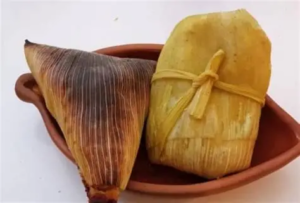
A fried dough preparation whose recipe may include flour, eggs, milk, cheese or anise.
It is often served with syrup or honey.
Where to try it
Api, Pasteles y Buñuelos
Av. García Lanza 60
Alternative:
Api con Tojori y Buñuelos — Juan Manuel Cáceres
When to find it
Mainly breakfast or merienda.
Price observed
Approximately Bs 3–6
Vegetarian: Yes
Spicy: No
Alpaca tip:
Try it with api.

Marinated beef heart grilled on skewers and served with potato and a peanut-based sauce.
Where to try it
Anticuchos Mary
Vincenti 740
When to find it
At night, normally from approximately 5:00–6:00 PM onwards.
Price observed
Approximately Bs 10–15
Vegetarian: No
Spicy: Depends.
Alpaca tip:
Look for busy stalls with good turnover and skewers being grilled continuously.
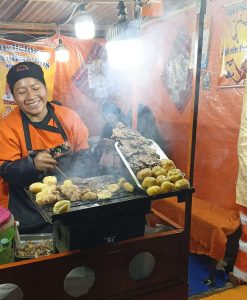
Bolivian food is not only about what you eat. La Paz also has fruit juices, corn-based drinks, dried-fruit refreshments, traditional coffee preparations and hot drinks that are worth trying on their own.
Some are easy to find in markets, while others are better found in cafés or businesses that prepare them regularly.
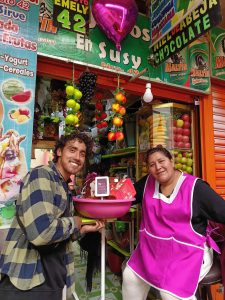
Tumbo is an Andean fruit related to passionfruit. It has a fresh, tart flavour and is commonly prepared as juice.
Mercado Rodríguez
Rodríguez, La Paz
Fresh-juice stalls operate throughout the market, making it a good place to look for tumbo and other seasonal fruits.
Another convenient option is:
Mercado Lanza
Av. Pérez Velasco, San Francisco, La Paz
For a more predictable sit-down option:
Wistupiku
Calle Comercio 1057, between Socabaya and Yanacocha
Their menu includes a refresco de tumbo.
Market juice stalls are easiest to find during the morning and daytime. Availability depends on the fruit and the individual vendor.
At a market juice stall, ask:
¿Qué fruta está buena hoy?
Which fruit is good today?
You may discover something you would not have chosen from a menu.
Api is a warm, thick corn-based drink, usually sweetened and flavoured with spices such as cinnamon.
The purple version is the one visitors usually notice first, but api blanco is also prepared.
Wistupiku
Calle Comercio 1057, central La Paz
They serve both Api Morado and Api Blanco.
You can also look for api at Mercado Lanza and at stalls specialising in api, pastel and buñuelos.
Api is particularly associated with breakfast and cooler parts of the day, although businesses such as Wistupiku make it easier to find outside traditional street-vendor hours.
Try your api with a pastel de queso.
The combination is much more representative than trying the drink by itself.

Tojorí is another traditional warm drink made from corn.
It is usually prepared from white corn and spices, and versions with milk are also common.
Although it can look similar to api at first, the texture and flavour are different.
Wistupiku
Calle Comercio 1057, La Paz
Their menu includes both Tojorí and Tojorí con Leche.
Another option is:
Api con Tojori y Buñuelos
Juan Manuel Cáceres, La Paz
Plus Code: FVQ6+HQP
Traditionally easier to find around breakfast and merienda, although availability depends on the business.
If you see both api and tojorí on the same menu, try them side by side.
It is an easy way to see how corn is used in very different drinks.

Mocochinchi is a cold drink made from dried peaches cooked in water with sugar and spices such as cinnamon.
The rehydrated peach is often served inside the glass.
La Boliviana
Calle Sagárnaga corner Murillo
Galería Chuquiago #213, second floor
They serve an artisanal version of mocochinchi.
You can also look for it in traditional markets and food stalls around La Paz.
It is generally easier to find from lunchtime onwards, especially in restaurants, markets and traditional food businesses.
Don’t be surprised when you reach the bottom of the glass and find an entire peach waiting for you.

Sultana is made from the dried husk of the coffee cherry.
Instead of using the roasted coffee bean, this drink uses another part of the same fruit, producing a lighter and often fruitier flavour.
It can be served hot or cold.
La Especiería
Av. Saavedra, La Paz
Their café menu includes sultana.
During regular café opening hours, generally from midday into the afternoon.
If you already drink Bolivian coffee, trying sultana is especially interesting because it shows another use of the coffee fruit.

Sucumbé is a warm alcoholic drink prepared with milk, spices and Singani, Bolivia’s grape spirit.
It is particularly suited to cold La Paz evenings.
Nina Wasi (café cultural)
Pasaje Kuljis, sobre la calle Genaro Sanjinés, entre Ingavi y Comercio, La Paz.
A small cultural café in central La Paz with a more local atmosphere than the tourist-focused cafés around Sagárnaga.
When to go: afternoon or early evening.
Alpaca tip: A good option if you want to try traditional drinks in a quieter, more local setting.
Best looked for during the afternoon or evening.
Yes.
Sucumbé may look like another warm traditional drink, but unlike api or tojorí, it contains alcohol.

La Paz also has older ways of preparing coffee.
Traditional café destilado is slowly prepared using a traditional drip coffee maker, producing a concentrated coffee that can then be served black or with milk.
Mercado Lanza
Av. Pérez Velasco, San Francisco, La Paz
Another easy option is:
Wistupiku
Calle Comercio 1057
They also offer café destilado and café destilado con leche.
During regular café opening hours.
If you have already tried Bolivian speciality coffee prepared as espresso or filter coffee, try café destilado as well.
It represents a different part of La Paz’s coffee culture.

Not every traditional drink belongs to a restaurant menu.
Some of the best places to look are still markets, juice stalls and small specialised businesses, where availability may depend on the hour, season and what was prepared that day.
That is why this guide gives you places where each drink can usually be found, rather than pretending every option is available everywhere all day.
Ask, look around and try what people are actually preparing that day. 🦙