

A L P A C A S T E P S
public transport

public transport

A simple visitor’s guide to getting around like people actually do

Getting around La Paz can feel confusing at first.

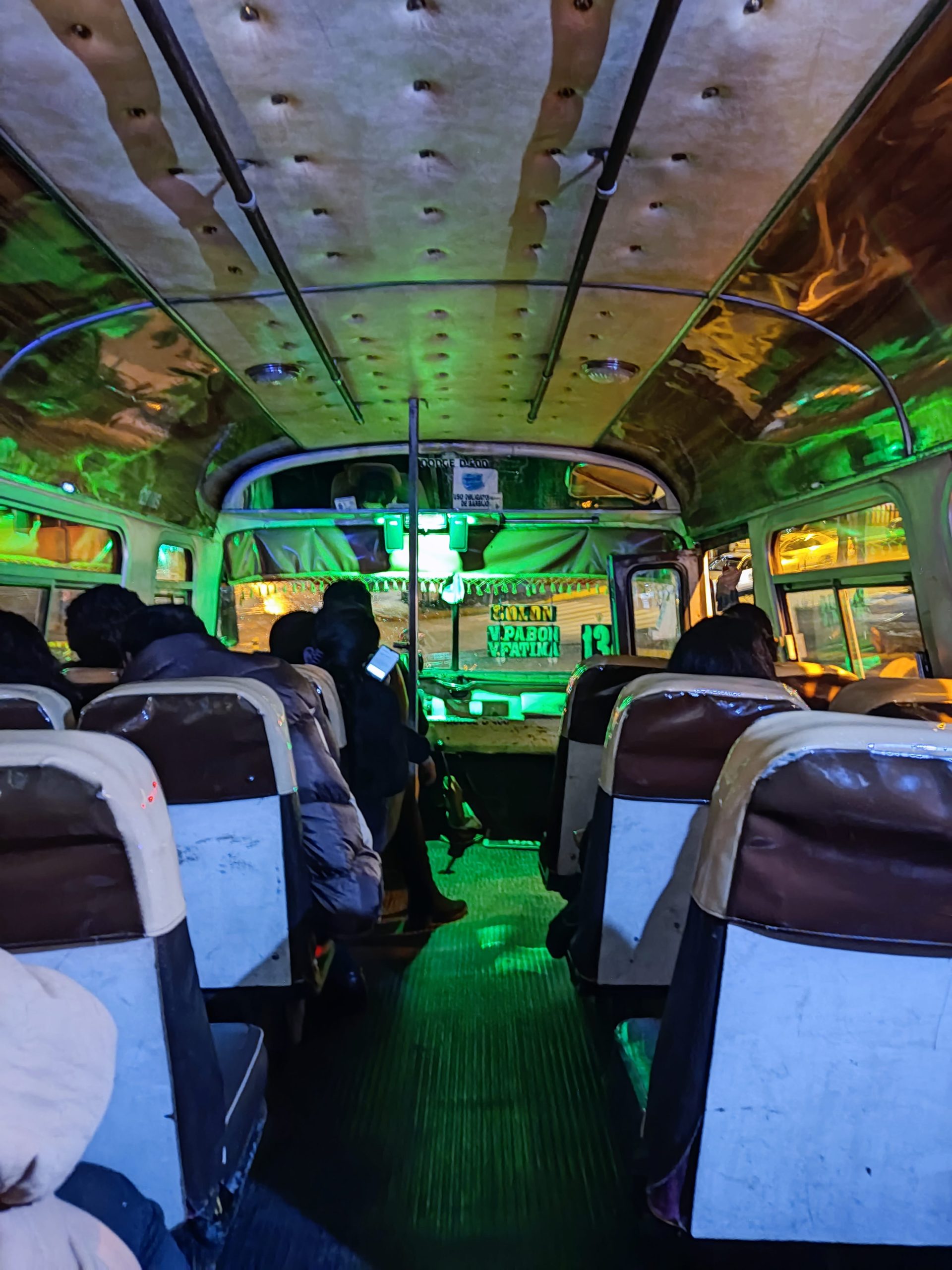
Unlike cities where every bus appears in an app and stops at a clearly marked station, much of La Paz still moves through minibuses, micros and trufis with fixed routes written on their windshields.

Once you understand the system, it becomes much easier.

This guide explains what each vehicle is, how to find the right one, what to say, how to pay and — most importantly — how to know when to get off.

Last checked by Alpaca Steps: August 2026


The 20-second answer

Look at the words on the windshield.

Ask:

“¿Va a ___?”
Does it go to ___?

If the answer is yes, get in and keep small Boliviano notes or coins ready.

Before reaching your destination, say:

“¡Aquí, por favor!”
Here, please!

or:

“¡Voy a bajar!”
I’m getting off!

That is basically the system.

Now let’s make sure you know what you’re getting into.


First: What’s the Difference?

🚐 Minibus

A minibus is a small van carrying several passengers along a fixed route.

They are everywhere in La Paz and are one of the most commonly used forms of public transport.

You will usually find a sign in the windshield showing important neighbourhoods, streets or destinations along the route.

mini la paz


🚌 Micro

A micro is a small or medium-sized city bus.

They usually follow established routes and tend to be cheaper than minibuses.

Some are older, colourful buses that are very easy to recognise once you’ve seen one.

micro la paz


🚕 Trufi

A trufi is basically a shared taxi that follows a fixed route.

The word comes from taxi de ruta fija.

Unlike a normal taxi, you don’t hire the whole car. Other passengers get in and out along the route.

Again, the most important information is normally displayed in the windshield.

trufi la paz turfi

The municipal government itself defines TRUFI as a taxi de ruta fija.


The Most Important Skill: Read the Windshield

Forget about trying to memorise dozens of route numbers.

In La Paz, the words on the windshield are often more useful than the number.

You might see something like:

MALLASA – CALACOTO – OBRAJES

Those words indicate important places along the vehicle’s route.

They don’t necessarily mean that every word is the final stop.

What should you do?

Before getting in, simply ask:

¿Va a Mallasa?
Does it go to Mallasa?

Or:

¿Pasa por Plaza San Francisco?
Does it pass San Francisco Square?

If you’re carrying Google Maps on your phone, you can also show the driver the destination.

[PHOTO: Windshield with arrows pointing to destination names]

Alpaca Tip

If you learn only one sentence for public transport in La Paz, make it:

¿Pasa por ______?

It will save you a lot of confusion.


How Do I Find the Stop?

This is where La Paz works differently from many European or North American cities.

For much of the traditional transport system, you should not expect a formal bus stop with a timetable and sign.

Minibuses, micros and trufis commonly stop along their routes to pick up and drop off passengers rather than operating exclusively through fixed formal stops.

Stand on the side of the road where traffic is travelling in your direction.

Watch the approaching vehicles.

When you see the correct destination on the windshield:

raise your hand.

The driver will usually pull over when possible.

mini parada


Getting In

For a minibus or micro, enter and take any available seat.

For a trufi, get in as you would a shared taxi.

Don’t be surprised if the vehicle is small.

And if you have a large backpack, keep it close to you and avoid blocking the door or aisle.

One useful thing to remember:

people may need to get out so another passenger can leave the back seats.

If everyone suddenly starts moving, you probably haven’t arrived — you’re just helping somebody else get out.


How Much Does Public Transport Cost?

The municipal tariff introduced on 24 December 2025 set the following fares in La Paz, but transport fares can change, so treat this table as a current reference rather than something that will remain valid forever.

TransportDaytime fareNight fare
Micro / BusBs 2.50Bs 2.80
Minibus – short tripBs 3.00Bs 3.30
Minibus – long tripBs 3.50Bs 3.80
TrufiBs 2.50–4.50 depending on routeRoute dependent

For this fare system, night fares begin at 9:00 PM.

Some longer or special routes outside the normal urban bands may have their own price. 

So if you’re unsure, ask:

¿Cuánto es?
How much is it?

Always carry small cash

Coins and Bs 5, Bs 10 or Bs 20 notes are much easier than trying to pay a Bs 3 fare with a Bs 100 note.


When Do I Pay?

This can vary between vehicles and routes.

You may see passengers pay shortly after boarding, during the journey or when they are getting out.

Don’t panic if nobody immediately asks you for money.

Watch what other passengers do.

If you’re unsure:

¿Cuánto es?

and hand the driver the fare when convenient.


How Do I Tell the Driver Where I’m Going?

If you’re worried about missing your stop, tell the driver when you get in:

¿Me avisa en ______, por favor?
Could you tell me when we reach ______, please?

For example:

¿Me avisa en el Valle de la Luna, por favor?

This is one of the most useful sentences a visitor can learn.

You can also keep Google Maps open and follow your location during the journey.


How Do I Get Off?

When you’re getting close, say clearly:

¡Aquí, por favor!

or:

¡Voy a bajar!

Don’t whisper it from the back of a noisy minibus.

Say it loudly enough for the driver to hear you.

The driver will stop where it is possible to let you out.

Wait until the vehicle has stopped and pay attention when stepping onto the street — traffic may be very close beside you. 


What About Normal Taxis?

A normal taxi is different from a trufi.

With a taxi, you’re hiring the vehicle for your own destination rather than joining a fixed shared route.

The easiest way is:

Tell the driver where you’re going before getting inside.

For example:

¿Me lleva a Plaza San Francisco?

Then ask:

¿Cuánto me cobra?
How much will you charge me?

Agree on the price before starting the trip.

La Paz has historically used zone-based radiotaxi pricing, and current real-world prices depend heavily on the origin, destination and service used. 

Taxi or trufi?

This is an important distinction:

Trufi: shared + fixed route + price per passenger.

Taxi: private ride + destination chosen by you + agree the fare.


Useful Spanish You’ll Actually Need

Take a screenshot of this section.

¿Va a ______?
Does it go to ______?

¿Pasa por ______?
Does it pass ______?

¿Me avisa en ______, por favor?
Please tell me when we reach ______.

¿Cuánto es?
How much is it?

¿Cuánto me cobra hasta ______?
How much will you charge me to ______?

¡Aquí, por favor!
Here, please!

¡Voy a bajar!
I’m getting off!


Don’t Make These Mistakes

Don’t get into a vehicle simply because you recognise one word on the windshield. Ask first.

Don’t assume that a number alone tells you everything about the route.

Don’t expect every minibus to stop at a formal bus stop.

Don’t carry only large banknotes.

Don’t wait until you’ve already passed your destination to tell the driver you want to get off.

And don’t be embarrassed to ask.

People in La Paz ask drivers:

“¿Pasa por…?”

all the time.

You aren’t doing anything strange.


Is Public Transport Difficult for Foreigners?

At first, yes.

Not because it’s impossible to use, but because much of the information that locals understand automatically isn’t written down anywhere.

We know which corner to stand on.

We recognise words on the windshield.

We know when to raise our hand.

We know what to shout when we want to get off.

A visitor doesn’t.

That’s exactly why we’re building The Alpaca Guide.

Our goal isn’t just to tell you which minibus to take.

We want to show you:

where to stand, what to look for, what to say and where to get off.


The Alpaca Formula

Find the route → read the windshield → raise your hand→ ask “¿Va a ___?”  → get in → pay → say “¡Aquí, por favor!” → get off.

Once you’ve done it once, La Paz becomes much easier to move around.


Need a Specific Route?

We’re building detailed, step-by-step guides for places visitors frequently ask us about, including:

Valle de la Luna · Killi Killi · El Alto · 16 de Julio Market · Valle de las Ánimas · La Paz Airport · Copacabana

Each guide includes real pickup points, photos, phrases to use, costs and instructions for getting back.

Because seeing La Paz is easier when you understand how it moves.

🌿 Want to experience La Paz beyond transportation?


Leave a comment